How I Turned Art into a Smart Investment Game
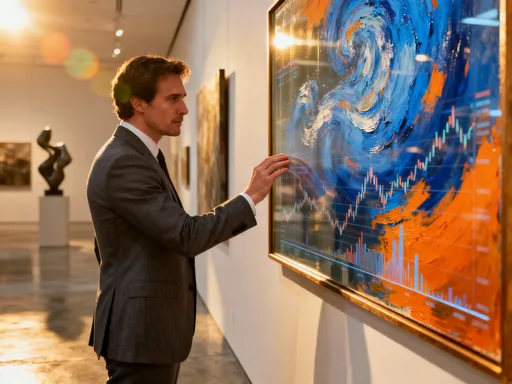
What if your taste in art could also grow your wealth? I used to see paintings and sculptures as pure passion — until I learned how strategic collecting can deliver serious financial upside. It’s not about buying what’s pretty; it’s about spotting value, timing moves, and understanding the market like an investor, not just a fan. Let me walk you through how art, when approached the right way, can become a powerful asset. This isn’t about luck or insider connections. It’s about applying disciplined thinking to a world often ruled by emotion and prestige. With the right knowledge, anyone can navigate this space and turn aesthetic appreciation into long-term financial growth.
Why Art? The Hidden Potential of an Undervalued Asset Class
Art has long been seen as a luxury, something reserved for the wealthy to decorate their homes or showcase cultural sophistication. But beneath the surface, fine art represents a unique and often overlooked category of investment. Unlike stocks or bonds, art is a tangible asset — you can see it, touch it, and live with it. More importantly, its value does not move in lockstep with traditional financial markets. This low correlation means that when stock prices dip during economic uncertainty, art can remain stable or even appreciate, offering a form of portfolio insulation.
Over the past twenty years, data from major art market indices such as the Mei Moses Index has shown that top-tier artworks have delivered annualized returns comparable to, and sometimes exceeding, those of the S&P 500. For example, between 2000 and 2020, paintings by established contemporary artists appreciated at an average rate of 8 to 10 percent per year, with some individual works increasing in value by several hundred percent over the same period. These gains were not random; they followed patterns of rising global demand, increased museum attention, and limited supply due to the finite nature of an artist’s output.
What makes art particularly compelling is its dependence on cultural momentum. A young painter might go unnoticed for years, but once featured in a major biennale or acquired by a prominent museum, their market can surge almost overnight. This kind of transformation is rare in conventional investing, where price changes are usually tied to earnings reports or macroeconomic indicators. In the art world, value is shaped by narrative, visibility, and reputation — factors that can be anticipated and even influenced through careful observation.
Still, art is not without risk. It is an illiquid asset, meaning it cannot be sold quickly without potential loss in value. There are also costs involved in storage, insurance, and transaction fees, especially when using auction houses. However, for investors who approach art with patience and strategy, these challenges can be managed. The key lies in shifting perspective — seeing each acquisition not just as a beautiful object, but as a calculated addition to a broader financial plan. When treated this way, art stops being merely decorative and begins to function as a legitimate, long-term store of wealth.
The Mindset Shift: From Collector to Investor
Most people who buy art do so because they love it. The colors speak to them, the subject resonates, or the piece fits perfectly in their living room. While there is nothing wrong with purchasing art for emotional satisfaction, doing so exclusively limits its financial potential. To unlock the investment power of art, one must adopt a dual lens: appreciating beauty while also evaluating market dynamics. This shift — from pure collector to strategic investor — is the foundation of successful art investing.
Consider two buyers looking at the same emerging artist’s painting. One sees only the bold brushstrokes and vibrant palette and buys immediately because it “feels right.” The other asks questions: Has the artist had solo exhibitions? Are they represented by a reputable gallery? Have critics written about their work? Is there a growing waitlist of collectors? These inquiries reflect an analytical mindset, one focused on sustainability rather than sentiment. Both buyers may enjoy the artwork equally, but only the second is positioning themselves for possible financial gain.
This does not mean abandoning personal taste. In fact, the best art investments often come from works that the buyer genuinely admires, because passion sustains long-term holding. The difference is in the decision-making process. An investor-collector balances desire with due diligence. They understand that emotional attachment should enhance, not override, rational assessment. This balance allows them to avoid overpaying for hyped pieces or falling for short-lived trends that lack lasting value.
Another critical component of this mindset is patience. Art rarely delivers quick returns. Unlike day trading or speculative stocks, the art market rewards those who wait. A piece purchased today may take five, ten, or even fifteen years to reach its peak value. During that time, the investor must resist the urge to react to market noise or fleeting fads. By maintaining a long-term outlook and focusing on quality over immediacy, they position themselves to benefit from compound appreciation — the slow but steady rise in value that comes from sustained recognition and demand.
Spotting Value: How to Find Art That Appreciates
Not all art increases in value, and recognizing which pieces have growth potential is one of the most important skills in art investing. While iconic names like Jean-Michel Basquiat or David Hockney consistently command high prices, entering those markets requires significant capital and offers limited upside for new buyers. The real opportunity lies in identifying talented artists before they become widely recognized — the so-called “pre-market” phase where prices are still accessible but momentum is building.
One effective method is tracking artists who exhibit regularly in respected institutions or international art fairs. Participation in events like the Venice Biennale, Art Basel, or the Whitney Biennial signals institutional validation and often precedes a rise in market value. Similarly, representation by a well-regarded gallery — particularly one known for launching careers — is a strong indicator of future success. Galleries act as gatekeepers, curating talent and connecting artists with serious collectors and curators. Being part of such a network increases visibility and credibility, both of which drive demand.
Another valuable tool is secondary market data. Auction results from firms like Sotheby’s, Christie’s, or Phillips provide transparent records of past sales. By analyzing these trends, investors can identify artists whose works are selling above estimate, showing increasing bids, or attracting bidders from multiple regions — all signs of growing interest. For example, if a mid-career painter’s work sold for $20,000 five years ago and recently fetched $80,000 under similar conditions, that trajectory suggests strong upward momentum.
Critical reception also plays a crucial role. Reviews in major publications like Artforum, Frieze, or The New York Times signal that an artist is being taken seriously within the cultural conversation. Academic attention — such as inclusion in university curricula or scholarly essays — further reinforces long-term relevance. These non-financial markers often precede commercial success, making them early warning signals for savvy investors. By combining market data, institutional presence, and critical acclaim, one can build a picture of which artists are likely to appreciate over time, turning informed research into tangible returns.
Timing the Market: When to Buy and When to Hold
Even with the best research, poor timing can undermine an otherwise sound investment. The art market, though less volatile than stocks, still moves in cycles influenced by broader economic conditions, collector sentiment, and individual artist milestones. Knowing when to enter and when to stay patient is essential for maximizing returns. Unlike public equities, where prices update in real time, the art market operates more slowly, making timing both challenging and impactful.
One of the most advantageous moments to buy is during periods of economic downturn. When traditional markets decline, some collectors pull back from art spending, creating opportunities for those with available capital. Prices may stabilize or even dip slightly, allowing investors to acquire quality works at favorable terms. Historical analysis shows that many significant collections were built during recessions, when competition was lower and selection was stronger. These buyers benefited later when the economy recovered and art values rebounded — sometimes dramatically.
Another strategic entry point is just before a major career milestone for an artist. For instance, if a painter is about to open a solo exhibition at a major museum — such as the Museum of Modern Art or Tate Modern — their market typically experiences a surge in interest. Anticipating this event and purchasing ahead of time allows investors to buy at pre-hype prices. Once the show opens and receives media coverage, demand often rises, pushing secondary market values higher. This kind of foresight requires staying informed about curatorial calendars and exhibition schedules, but the payoff can be substantial.
Equally important is knowing when to hold. Art is not a short-term asset. Its value compounds over years, driven by sustained exposure and growing reputation. Selling too early — say, after a 30 percent gain in two years — may feel rewarding, but it could mean missing out on much larger gains down the line. Conversely, holding indefinitely without monitoring market signals can lead to stagnation, especially if an artist’s popularity fades or oversupply enters the market. The ideal holding period varies, but most successful art investors think in decades, not months. They track artist development, market trends, and collector demand to determine the optimal moment to exit — not out of emotion, but based on evidence.
Reducing Risk: Provenance, Authentication, and Diversification
Like any investment, art carries risks — and some are unique to the physical and cultural nature of the asset. Two of the most significant concerns are authenticity and ownership history, commonly referred to as provenance. Without clear documentation, a work’s value can plummet or become unsellable. Forged pieces, misattributed works, or items with unclear legal title have derailed many would-be collectors. Therefore, due diligence in verification is not optional — it is fundamental to protecting one’s investment.
Provenance refers to the documented history of ownership. A strong provenance traces a work back to the artist or their estate, includes records of past exhibitions, and shows a chain of reputable collectors or institutions. Works with gaps in their history or anonymous sellers raise red flags. Authentication is equally vital. Reputable artists often have official committees or catalogues raisonnés that verify the legitimacy of their pieces. For living artists, direct confirmation from the studio or gallery adds another layer of security. Never rely solely on verbal assurances — always obtain written certificates and supporting documentation.
Working with trusted intermediaries significantly reduces these risks. Established galleries, auction houses, and art advisors have reputations to uphold and systems in place to vet works before sale. While their services come at a cost, the protection they offer is well worth it. Private sales through unverified sources may seem appealing due to lower prices, but they carry far greater uncertainty. When in doubt, it’s better to walk away than risk acquiring a problematic piece.
Diversification is another essential risk management strategy. Putting all funds into a single artist or style is dangerous, as tastes change and markets shift. Instead, investors should build a balanced portfolio across different types of art — various mediums (painting, sculpture, photography), price points, geographic regions, and career stages of artists. For example, pairing a few high-potential emerging talents with more established mid-career figures creates a mix of growth and stability. This approach mirrors principles used in traditional investing, where spreading exposure reduces overall volatility and increases resilience against market fluctuations.
Practical Moves: Storage, Insurance, and Exit Strategies
Once a piece is acquired, the work of protecting its value begins. Art is sensitive to environmental conditions — exposure to sunlight, humidity, temperature swings, and physical damage can all degrade its condition and, consequently, its market worth. Proper storage is therefore not a luxury but a necessity. Climate-controlled environments with stable temperatures (around 70°F) and relative humidity (between 40–50%) help preserve materials, especially for works on paper, textiles, or organic media. UV-filtering glass and indirect lighting prevent fading, while secure display cases or vaults protect against theft or accidents.
Insurance is another non-negotiable aspect of responsible art ownership. Standard homeowner’s policies often provide limited coverage for art and may exclude high-value pieces altogether. A specialized fine art insurance policy, offered by firms experienced in cultural assets, ensures comprehensive protection against fire, flood, theft, and accidental damage. These policies typically require detailed documentation, including appraisals, photographs, and provenance records, which also serve as valuable tools for future sales. Premiums vary based on value and location, but the cost is minor compared to the potential loss of an uninsured piece.
Documentation extends beyond insurance. Keeping a meticulous record of every transaction, exhibition, restoration, and appraisal builds a robust history that enhances credibility and value. Digital archives, secure cloud backups, and physical files should all be maintained. This information becomes especially important when preparing to sell, as buyers and institutions demand transparency.
Exit strategies should be considered from the very beginning, even if selling is not the immediate goal. There are several avenues for monetizing art: public auctions, private dealers, gallery consignments, or direct sales to collectors. Each has advantages and drawbacks. Auctions offer broad exposure and the potential for competitive bidding, but they come with high seller’s fees (often 10–20%) and no guarantee of sale. Private sales through dealers may yield faster results and lower fees, but they depend on finding the right buyer. Galleries can provide curated placement and access to their client networks, but they typically take a commission and may require exclusive representation.
The key is aligning the exit method with market conditions and personal objectives. For time-sensitive needs, a private sale might be preferable. For maximizing price, waiting for the right auction season — often during major art weeks in New York, London, or Hong Kong — can make a significant difference. Regardless of method, having all documentation ready, maintaining the artwork in excellent condition, and understanding current market trends will ensure the best possible outcome when the time comes to let go.
Real Gains, Real Risks: What This Strategy Can (and Can’t) Do
Art investing is not a shortcut to wealth. It demands time, research, and a willingness to learn. Unlike automated stock trading or dividend funds, it does not offer passive income or daily price updates. Returns are uncertain, liquidity is limited, and the path to appreciation can be long. For these reasons, art should never be the sole focus of a financial strategy, nor should it be approached with the expectation of quick profits. It is best viewed as a complementary asset — one that adds diversity, cultural depth, and long-term growth potential to a well-rounded portfolio.
That said, when done thoughtfully, the rewards can be significant. Beyond financial gains, there is immense personal satisfaction in owning works that inspire and evolve in meaning over time. Living with art enriches daily life in ways that pure monetary returns cannot measure. Yet, the dual benefit — aesthetic pleasure combined with potential appreciation — is precisely what makes this approach so powerful. It transforms collecting from a hobby into a disciplined practice, blending passion with prudence.
The strategy outlined here is not reserved for the ultra-wealthy. With careful planning, even modest budgets can enter the market. Many successful investors start small, acquiring works by emerging artists priced between $2,000 and $10,000. Over time, as those artists gain recognition, the initial investments can multiply. The key is consistency, education, and emotional discipline. Avoid chasing trends, resist FOMO (fear of missing out), and focus on quality and sustainability.
In the end, turning art into a smart investment game is about more than money. It’s about cultivating vision — the ability to see beyond the surface, to anticipate cultural shifts, and to make decisions grounded in knowledge rather than impulse. It’s about building something that lasts: a collection that reflects both personal taste and strategic insight. For those willing to play the long game, art offers not just financial upside, but a legacy — one that can be passed down, appreciated, and continued for generations to come.