You Won’t Believe How Delhi’s Neighborhoods Tell India’s Soul
New Delhi isn’t just a capital—it’s a living storybook of cultures stacked block by block. I wandered through its districts, each turn revealing a new world: spice-scented lanes, Mughal echoes, and modern beats pulsing under ancient skies. What shocked me? How much history, faith, and flavor fit within one city. From Chandni Chowk’s chaos to Hauz Khas’ quiet courtyards, every neighborhood breathes differently. This isn’t just travel—it’s time travel. Let me take you where guidebooks rarely go.
The Heartbeat of Old Delhi: Where Time Stands Still
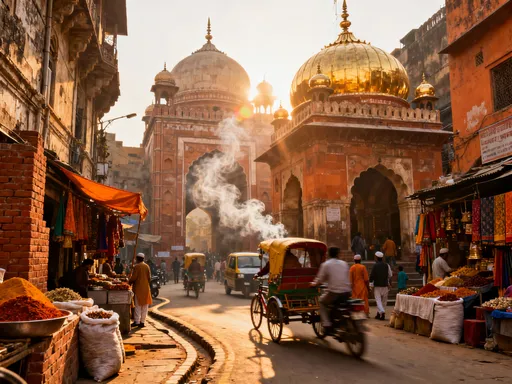
Chandni Chowk is not a marketplace—it is a living organism, breathing with the rhythm of centuries. Established in the 17th century by Mughal Emperor Shah Jahan, this historic artery once served as the ceremonial boulevard of Shahjahanabad, the walled capital of the Mughal Empire. Today, it remains one of the busiest and most densely packed markets in India, yet its essence has not been diluted by time. Narrow alleys branch off like capillaries, each dedicated to a specific trade: silverware, textiles, spices, or religious artifacts. The air hums with the sizzle of parathas frying in ghee, the clinking of metal from karigars (artisans) shaping brass, and the call to prayer from the Sunehri Masjid rising above the clamor.
Walking through Chandni Chowk is an immersion in sensory storytelling. One can trace the lineage of a family-run jalebi shop that has served syrupy coils of fried batter for five generations. The Jain temples tucked between shops, such as the ornate Digambar Jain Lal Mandir, stand as quiet sanctuaries amidst the commercial frenzy. Devotees feed pigeons in the courtyard—a daily ritual symbolizing compassion and non-violence. These spiritual pockets coexist seamlessly with commerce, illustrating how faith and livelihood are interwoven in the fabric of daily life. Even the cycle rickshaws, painted in bright hues and crammed with goods, are not merely transport but mobile microcosms of the city’s relentless energy.
What makes Chandni Chowk irreplaceable is not just its historical significance, but its resistance to homogenization. Unlike sanitized shopping malls, this neighborhood thrives on authenticity. Shopfronts are often unchanged for decades, their wooden signs weathered by sun and soot. Yet, beneath this surface continuity, adaptation is constant. Young entrepreneurs now run Instagram-famous street food stalls, blending tradition with digital outreach. Heritage walks led by local historians help visitors decode the layers of Mughal, British, and post-independence influence. The district does not exist as a museum piece—it evolves while honoring its roots, making it the true heartbeat of Old Delhi.
New Delhi’s Imperial Vision: Power in Stone and Space
Just a few kilometers west of Chandni Chowk lies a radically different Delhi—one of wide avenues, symmetrical gardens, and monumental architecture. This is Lutyens’ Delhi, named after British architect Edwin Lutyens, who designed the imperial capital in the early 20th century. Conceived as the seat of British power, this planned city was intended to project dominance through order, scale, and classical aesthetics. Rajpath, the grand ceremonial boulevard, stretches from Rashtrapati Bhavan to India Gate, echoing the grandeur of European capitals like Paris and London. Its vast open spaces and axial symmetry were designed not just for function, but for spectacle—parades, state functions, and the display of imperial authority.
The contrast between Old Delhi and Lutyens’ Delhi is more than architectural—it is philosophical. While Old Delhi grew organically, shaped by trade, faith, and community needs, New Delhi was imposed from above, reflecting a top-down vision of governance and control. The buildings here—Rashtrapati Bhavan, Parliament House, and the Secretariat blocks—combine Indian motifs with neoclassical design, creating a hybrid style meant to legitimize colonial rule by appropriating local symbolism. The use of red sandstone and chhajjas (overhanging eaves) nods to Mughal architecture, yet the overall effect remains distinctly foreign in its formality and scale.
Today, Lutyens’ Delhi remains the center of political power, housing government offices, diplomatic enclaves, and official residences. Yet, it is also increasingly accessible to the public. India Gate, once a war memorial isolated in open grounds, is now a gathering place for families, couples, and protestors alike. The Central Vista, recently redeveloped, continues to spark debate about heritage, modernization, and national identity. What endures is the tension between openness and exclusivity—between a space built for imperial distance and one now claimed by democratic participation. This duality makes New Delhi not just a relic of empire, but a living dialogue about power, memory, and belonging.
Hauz Khas Village: Art, Ruins, and the Modern Bohemia
Nestled around a medieval reservoir and Islamic seminary ruins, Hauz Khas Village has transformed from a forgotten corner of Delhi into one of its most vibrant cultural enclaves. Once a quiet neighborhood on the southern edge of the city, it began attracting artists, designers, and creatives in the early 2000s. Today, it is a seamless blend of history and modernity—where 14th-century tombs stand beside chic boutiques, art galleries, and rooftop cafes with panoramic views of the surrounding forest. The Hauz Khas Complex, originally built by Sultan Alauddin Khalji and later expanded by Firoz Shah Tughlaq, once served as a center of learning and water management. Now, it serves as a backdrop for fashion shoots, poetry readings, and weekend brunches.
What sets Hauz Khas apart is its ability to evolve without erasing its past. The ruins are not cordoned off as a sterile monument but are integrated into daily life. Visitors sip coffee steps away from arched tombs covered in creeping vines. Local designers showcase handwoven textiles and contemporary jewelry in restored heritage buildings. Art exhibitions often draw inspiration from the site’s layered history, bridging medieval Islamic scholarship with modern urban expression. The area hosts regular cultural events—heritage walks, music nights, and craft fairs—that draw both locals and tourists, fostering a sense of community rooted in creativity and respect for the past.
Beyond aesthetics, Hauz Khas reflects a broader shift in how Indians engage with heritage. Rather than treating historical sites as frozen relics, this neighborhood demonstrates adaptive reuse—allowing the past to inform, not inhibit, the present. It is a model of sustainable urbanism, where green spaces, pedestrian pathways, and mixed-use development coexist. For the creative class, especially women entrepreneurs and independent artists, Hauz Khas offers a supportive ecosystem. Small studios thrive alongside cafes, creating a low-barrier entry point for innovation. In this way, the village is not just a destination—it is a statement about how cities can honor history while embracing change.
South Delhi’s Cultural Crossroads: From Temples to Theaters
South Delhi neighborhoods like Greater Kailash, Vasant Vihar, and Defence Colony represent a different kind of urban mosaic—one shaped by post-partition migration, economic growth, and cosmopolitan values. These areas emerged in the mid-20th century as residential hubs for civil servants, military personnel, and professionals. Over time, they evolved into cultural crossroads where diverse communities live in close proximity, maintaining their traditions while participating in a shared urban life. Temples, churches, gurdwaras, and mosques often stand within minutes of each other, reflecting the pluralistic character of the city.
In Greater Kailash, for instance, one can attend a Carnatic music concert at a South Indian cultural academy in the evening and enjoy Punjabi cuisine at a family-run dhaba the next morning. Community centers such as the India Habitat Centre host theater performances, art exhibitions, and lecture series that draw audiences from across the city. These spaces are not exclusive—they are open to all, fostering intercultural dialogue and mutual appreciation. Libraries, reading clubs, and language workshops further enrich the intellectual life of these neighborhoods, making them hubs of lifelong learning.
What makes South Delhi unique is its balance between privacy and community. Unlike the dense, public-facing life of Old Delhi, these areas emphasize residential comfort and green spaces. Yet, they are far from insular. Residents actively participate in neighborhood associations, environmental initiatives, and charitable drives. Women-led groups organize cooking classes, craft bazaars, and wellness circles, creating networks of support and friendship. Schools and parks serve as neutral grounds where children from different backgrounds play together, building social cohesion from an early age. In this way, South Delhi exemplifies how modern urban living can be both comfortable and inclusive.
Chandigarh Road & Beyond: The Rise of Suburban Identity
As Delhi expands, new neighborhoods along arteries like Chandigarh Road, in areas such as Dwarka, Narela, and Rohini, are redefining the city’s periphery. These suburbs were initially developed to decongest the capital and provide affordable housing. Today, they represent a new chapter in Delhi’s urban story—one shaped by migration, middle-class aspirations, and evolving infrastructure. Unlike the historic cores or elite enclaves, these districts are built for functionality, with wide roads, metro connectivity, and planned markets. Yet, they are not soulless extensions—they are developing their own identities, rooted in community resilience and local initiative.
Dwarka, for example, is not just a residential zone but a self-contained township with schools, hospitals, and shopping complexes. It attracts young families and working professionals seeking a quieter life without sacrificing access to the city. Local markets buzz with activity, offering everything from organic produce to traditional sweets. Community gardens and resident welfare associations play a key role in maintaining quality of life. In Narela, on the northern edge, agricultural roots blend with industrial growth, creating a hybrid economy where farmers’ markets coexist with tech-enabled logistics hubs.
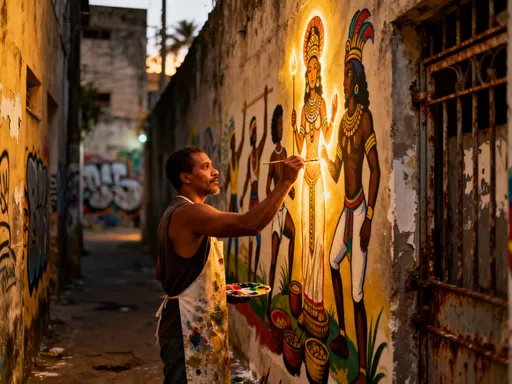
These areas face challenges—traffic congestion, uneven public services, and environmental pressures—but they also showcase grassroots innovation. Women’s self-help groups run successful catering businesses from home. Youth collectives organize clean-up drives and digital literacy camps. Local artists paint murals on public walls, transforming mundane spaces into expressions of civic pride. The Delhi government’s focus on metro expansion and smart city initiatives has improved connectivity, making these suburbs more integrated with the city’s core. As they grow, they remind us that urban identity is not only shaped by history, but by the daily choices of ordinary people building better lives.
Sacred Spaces and Living Faiths Across Districts
Religion in Delhi is not confined to temples, mosques, or gurdwaras—it is a living, breathing presence in everyday life. From the Sufi shrine of Nizamuddin Auliya, where qawwali music draws devotees every Thursday night, to the serene ISKCON Temple in East of Kailash, where morning aartis begin with the rising sun, faith is both personal and communal. What stands out is the spirit of inclusivity. At the dargah of Nizamuddin, people of all backgrounds sit together, listening to poetry and music that transcend religious boundaries. The langar (community kitchen) at Gurudwara Bangla Sahib serves thousands daily, regardless of faith, embodying the Sikh principle of equality and service.
These sacred spaces are not isolated—they are woven into the urban fabric. In Karol Bagh, a bustling commercial area, the Gurudwara’s towering dome rises above market stalls, a constant reminder of spiritual presence amid commerce. In Mehrauli, the annual Phool Walon Ki Sair festival sees Hindu and Muslim communities coming together to offer floral fans at both a temple and a dargah, a tradition dating back to the Mughal era. Such practices are not relics—they are actively maintained, passed down through generations, and embraced by youth.
The role of women in sustaining these traditions is profound. In many neighborhoods, women organize prayer groups, manage temple kitchens, and lead interfaith dialogues. They ensure that rituals are not just performed, but understood and felt. Religious festivals like Diwali, Eid, and Gurpurab become citywide celebrations, with lights, sweets, and shared meals bridging divides. In a world often marked by religious tension, Delhi’s neighborhoods offer a powerful counter-narrative—one where faith fosters connection, not division.
The Soul of the City: Why Neighborhoods Make Delhi Irreplaceable
Delhi’s greatness does not lie in its monuments or political power—it lies in its neighborhoods. Each district, from the ancient to the emerging, contributes a unique thread to the city’s cultural tapestry. Chandni Chowk teaches us about resilience and continuity. Lutyens’ Delhi reminds us of history’s weight and the evolution of power. Hauz Khas shows how creativity can breathe new life into ruins. South Delhi exemplifies harmony in diversity, while the suburbs reveal the quiet determination of ordinary citizens shaping their futures. Across all, sacred spaces anchor life in values of compassion, service, and shared humanity.
What makes Delhi irreplaceable is not just its size or history, but its ability to hold contradictions in balance. Chaos and order, tradition and innovation, solitude and community—all coexist within a few kilometers. This is not a city of uniformity, but of layered identities, where one can experience centuries in a single day. For the traveler, the lesson is clear: to understand Delhi, one must move beyond landmarks and enter its streets, markets, and homes. Real discovery happens not in grand vistas, but in the smell of chai at a roadside stall, the laughter in a park, or the quiet moment of prayer in a hidden courtyard.
To explore Delhi deeply is to witness the soul of India—not as a monolith, but as a mosaic of lived experiences. It is a city that challenges, inspires, and transforms. So walk slowly. Listen closely. Let the neighborhoods speak. Because in their stories, we find not just the past, but the enduring spirit of a people who build, believe, and belong—one street at a time.