You Won’t Believe These Hidden Cultural Gems in Tripoli
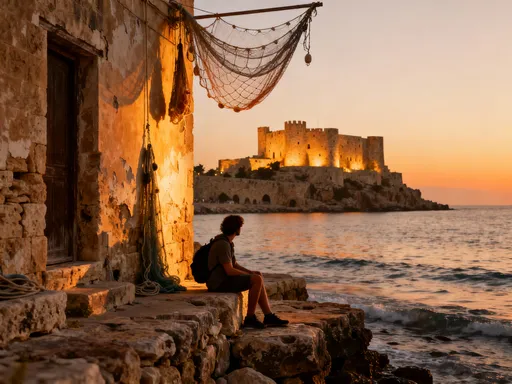
Tripoli, Libya isn’t the first place that comes to mind for most travelers—but trust me, its cultural heartbeat is stronger than you’d expect. I went in curious and left amazed. Beyond the ancient medina and sunlit coast, there’s a world of underground art spaces, family-run heritage houses, and forgotten Ottoman-era libraries that most tourists never see. This is real, raw culture—not staged for postcards. If you’re looking for authenticity, Tripoli’s quiet corners deliver in ways you won’t forget.
The Unexpected Soul of a Misunderstood City
Tripoli is often overlooked, misunderstood, or dismissed due to outdated perceptions and media portrayals that focus more on conflict than culture. Yet, for those willing to look beyond the headlines, the city reveals a layered, resilient identity rooted in centuries of Mediterranean exchange. Far from the chaos often associated with Libya in global news, Tripoli moves to a rhythm of its own—gentle, deliberate, and deeply hospitable. Visitors who arrive with openness are often met not with suspicion, but with tea, stories, and invitations into homes that have stood for generations. This warmth is not performative; it is woven into the social fabric, a reflection of a culture that values guesthood as a sacred tradition.
The experience of traveling through Tripoli feels like stepping into a narrative few have read. There are no crowds of tourists, no souvenir stalls shouting for attention, no guided group chants echoing through alleyways. Instead, exploration here is intimate and personal. Every encounter becomes meaningful, every discovery feels earned. It’s not uncommon for a simple inquiry about a historic doorway to lead to a two-hour conversation with a retired teacher, or for a quiet walk through a residential district to end with an impromptu invitation to share mint tea on a shaded rooftop. These moments are not curated for visitors—they emerge naturally from a society where conversation is an art and time is not measured in efficiency but in connection.
Shifting the perception of Libya as a travel destination begins with acknowledging the distinction between political instability and cultural richness. While travel advisories must always be respected and safety carefully considered, it is equally important to recognize that people and places are not defined solely by their governments or recent history. Tripoli has endured, and in doing so, it has preserved traditions, aesthetics, and ways of life that are increasingly rare in the modern world. For the culturally curious traveler—especially women in their 30s to 50s who value depth, authenticity, and human connection—Tripoli offers a rare opportunity to engage with a living heritage that is both ancient and evolving.
Old Town Secrets: Walking Through Centuries
The Medina of Tripoli is the city’s historic core, a UNESCO-recognized site that pulses with quiet energy. While many visitors limit their exploration to the outer edges—the bustling Suq al-Juma or the grand arches near the Red Castle—a deeper journey reveals a different world. Venture into the narrower lanes behind Bab al-Bahr, where sunlight filters through latticed wooden windows and the scent of cumin and cedar lingers in the air. These alleys, often unnamed and unmarked, are lined with centuries-old homes built from coral stone and limestone, their facades adorned with intricate mashrabiya screens and hand-carved stucco. Each corner tells a story of Andalusian refugees, Ottoman administrators, and trans-Saharan traders who once walked these same paths.
One of the most rewarding experiences in the medina is discovering its hidden courtyards—private oases tucked behind unassuming doors. Some are still family homes, passed down through generations; others have been gently restored into guesthouses or cultural salons. In one such courtyard, I met a woman named Fatima, whose family has lived in the same house since the 18th century. She showed me the central fountain where generations have washed their hands before prayer, the rooftop where figs are dried in the sun, and the storage rooms where antique textiles and handwritten Qur’ans are kept with reverence. These spaces are not museums; they are lived-in, breathing parts of daily life, where history is not displayed but lived.
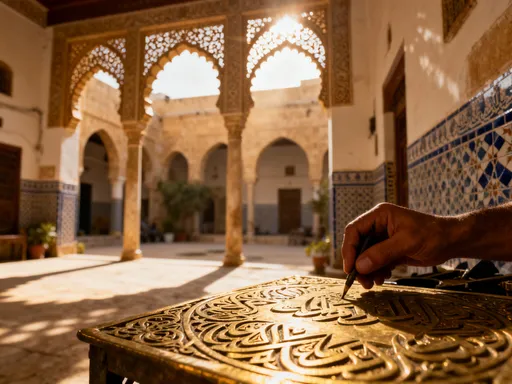
Equally compelling are the small craft workshops that continue to thrive in the medina’s backstreets. In a dimly lit alley near the old textile market, a master engraver named Mahmoud has spent 45 years shaping brass trays with delicate geometric patterns. His tools are simple, his workspace minimal, but his skill is extraordinary. He learned the craft from his father, who learned it from his grandfather, and though business is slower now, he continues because, as he says, “this work carries our dignity.” Nearby, a group of women weave wool on upright looms in a centuries-old technique that produces richly colored rugs with Berber motifs. These artisans are not seeking fame or tourism dollars—they work because their craft is part of who they are.
For visitors, engaging with these spaces requires sensitivity and respect. Photography should always be done with permission, especially inside homes or workshops. Purchasing a small item—whether a hand-hammered spoon or a woven bracelet—goes beyond souvenir collecting; it is a gesture of appreciation and support. Most artisans are happy to explain their process if asked politely, and many appreciate genuine interest more than transactions. The key is to approach not as a consumer, but as a guest in a long-standing tradition.
Beyond the Citadel: Culture in the Everyday
While historic sites offer insight, the true soul of Tripoli is found in the rhythm of daily life. Morning begins with the call to prayer echoing over rooftops, followed by the clatter of tea glasses in small neighborhood cafes. In the souqs, vendors arrange pyramids of dates, saffron, and dried limes while women in flowing jalabiyas haggle gently over price, their voices rising and falling like music. These markets are not tourist attractions—they are essential hubs of community life, where news is exchanged as freely as goods. A visit here is not just about observation; it is about participation, even in small ways. Sharing a glass of sweet mint tea with a shopkeeper, learning the proper way to roll a traditional cigarette (without smoking it, of course), or simply sitting quietly in a corner café watching the world unfold—these are the moments that create lasting connection.
One of the most beautiful aspects of Tripoli’s cultural expression is its reverence for language and calligraphy. Verses from the Qur’an are not only recited in mosques but also inscribed on public fountains, school walls, and even humble shop fronts. This integration of sacred text into everyday spaces reflects a worldview where spirituality and daily life are not separate realms. In residential neighborhoods like Tajura and Fashloum, older men can often be seen gathering in shaded courtyards, reciting poetry from memory—classical Arabic verses that speak of love, loss, and the passage of time. These oral traditions are a living archive, preserving history in ways that books alone cannot.
Traditional dress, too, offers insight into cultural identity. While younger generations increasingly wear Western clothing, many women—especially in older districts—still wear the darra’a, a long, flowing robe often embroidered with gold thread, or the shesh, a headscarf wrapped in regional styles. These garments are not relics; they are worn with pride and practicality, suited to the climate and cultural norms. For female travelers, dressing modestly—covering shoulders and knees, wearing a light scarf—is not only respectful but also a bridge to deeper interaction. When I followed this practice, I found doors opened more readily, invitations extended more freely, and conversations deepened in unexpected ways.
Blending in does not mean erasing oneself, but rather showing respect through presence. Smiles, patience, and a willingness to listen go further than fluent Arabic. Learning a few phrases—“Salam alaikum” (peace be upon you), “Shukran” (thank you), “Kayf halik?” (how are you?)—opens hearts. And while public displays of affection, loud behavior, or overt photography are best avoided, quiet curiosity is welcomed. The goal is not to become invisible, but to be seen as someone who values what Tripoli offers—not as spectacle, but as truth.
Forgotten Libraries and Private Collections
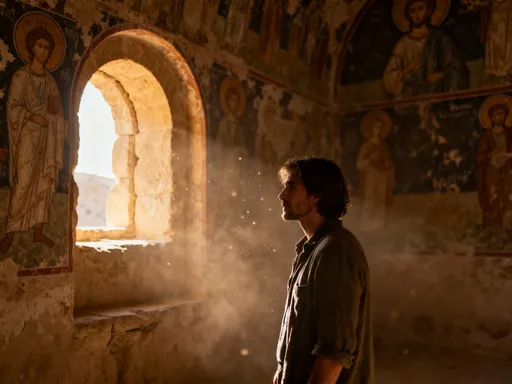
One of Tripoli’s best-kept secrets lies in its private manuscript collections—small, often family-run repositories that safeguard centuries of Islamic scholarship, poetry, and scientific inquiry. These are not grand national libraries with climate-controlled vaults, but humble rooms tucked above shops or within old homes, where handwritten Qur’ans from the 15th century rest beside treatises on astronomy, medicine, and jurisprudence. Many were saved from destruction during periods of conflict and have been passed down through generations of scholars and imams. To visit one is to step into a world where knowledge was painstakingly copied by hand, where every letter carried weight, and where books were considered sacred trusts.
I was granted access to one such collection through a local contact, a retired professor who serves as its informal custodian. The room was small, lit by a single lamp, with shelves made of reclaimed wood. The manuscripts, bound in leather and tied with silk ribbons, were stored in cedar boxes to protect them from humidity. One volume, written in Kufic script, contained medical remedies using herbs still grown in North African gardens today. Another, a commentary on the works of Ibn Sina (Avicenna), showed marginal notes in Persian and Ottoman Turkish, evidence of the city’s role as a crossroads of intellectual exchange. The professor spoke softly, almost reverently, as he turned the fragile pages with gloved hands, explaining that these texts are not just historical artifacts—they are part of an ongoing tradition of learning.
Preserving these collections is an act of quiet resistance. With limited funding, no formal digitization programs, and the constant threat of environmental damage, many families struggle to maintain these treasures. Some have lost volumes to flooding or fire; others have had items stolen during times of unrest. Yet, the commitment to preservation remains strong. These families see themselves not as owners, but as caretakers—guardians of a legacy that must be passed on. Their resilience is a testament to the enduring value placed on knowledge in Libyan culture.
For travelers, accessing such spaces is not a matter of buying a ticket, but of building trust. There are no official tours, no brochures, no websites. Entry is granted only through personal introductions, often after days of respectful engagement with the community. When granted access, visitors are expected to observe quietly, ask thoughtful questions, and never touch the manuscripts without permission. Some families may allow photography for academic purposes, but always under supervision. The experience is not about collecting photos or souvenirs—it is about bearing witness to a tradition of scholarship that continues against the odds.
Contemporary Creativity in a Historic Setting
While Tripoli’s past is deeply honored, its present is far from stagnant. A quiet cultural renaissance is unfolding, led by young artists, poets, and filmmakers who are reimagining the city’s identity through modern mediums. In repurposed Ottoman-era buildings, pop-up galleries showcase paintings that blend traditional Islamic patterns with abstract expressionism. In a former soap factory in the al-Hamidiya district, a collective of women hosts monthly poetry readings, where verses in Arabic, Tamazight, and Italian reflect the city’s layered history. These events are not widely advertised—they spread by word of mouth, through social media, or handwritten flyers taped to café windows.
Photography has become a particularly powerful tool for self-expression. A growing number of young Libyans are documenting everyday life—not the war, not the politics, but the beauty of ordinary moments: children playing in alleyways, elders repairing fishing nets, women arranging flowers in clay pots. These images, shared on Instagram and local exhibitions, challenge the dominant narratives about Libya and offer a more nuanced, human portrait. One photographer, Amal, explained that her work is “not about hiding the past, but about showing that life continues, that beauty persists.” Her series on Tripoli’s rooftop gardens—where families grow mint, tomatoes, and jasmine in recycled containers—has been featured in regional art festivals.
Film, too, is gaining ground. Despite limited infrastructure, independent filmmakers are producing short documentaries on topics ranging from traditional boat-building to the revival of Andalusian music. Screening events are held in private homes, community centers, or even open courtyards with projectors and white sheets. These gatherings are intimate, often followed by spirited discussions about identity, memory, and hope. The films are not polished by international standards, but they are honest, heartfelt, and deeply local—made by Libyans, for Libyans, with space for curious outsiders to listen and learn.
These creative initiatives are not isolated; they are part of a broader movement to reclaim cultural narrative. For many young Libyans, art is not a luxury—it is a form of healing, a way to process recent history while building something new. They face challenges—lack of funding, censorship concerns, limited access to materials—but their determination is palpable. To witness their work is to see Tripoli not as a city frozen in time, but as one quietly reinventing itself, drawing strength from its roots while reaching toward the future.
Practical Tips for Culturally Conscious Travel
Traveling to Tripoli requires preparation, patience, and a deep respect for local customs. The best time to visit is during spring (March to May) or autumn (September to November), when temperatures are mild and the light is ideal for exploration. Summers can be extremely hot, especially in July and August, while winters bring occasional rain, though rarely prolonged. Given the current travel climate, most visitors enter through special permits or as part of organized cultural tours—often arranged through trusted contacts or regional embassies. Independent travel is possible but requires thorough research and local guidance.
Dress is one of the most important considerations. For women, modest clothing is essential: long sleeves, loose-fitting dresses or pants, and a light headscarf for visiting religious or residential areas. Neutral or earth-toned colors are preferred, as bright or revealing clothing may draw unwanted attention. Men should wear long pants and avoid sleeveless shirts. These guidelines are not about restriction, but about showing respect for a conservative yet warm society where dignity and decorum are highly valued.
Etiquette plays a crucial role in building trust. Always greet people with “Salam alaikum,” accept tea when offered (even if just a sip), and avoid discussing politics, religion, or recent history unless initiated by your host. Physical contact between genders in public should be avoided, and public displays of affection are culturally inappropriate. When photographing people, always ask permission—especially women and children. A smile and a gesture often suffice, and many will happily pose if approached respectfully.
Finding authentic experiences begins with slowing down. Instead of rushing through sights, spend time in neighborhoods, chat with shopkeepers, and accept invitations when offered. Hiring a local guide—especially one recommended by trusted contacts—can open doors that would otherwise remain closed. Transportation within the city is best managed by trusted drivers or shared taxis; walking is ideal in the medina, but always stay aware of your surroundings. Above all, travel with humility. Come not to take, but to learn. The richest experiences in Tripoli are not found in guidebooks, but in the quiet moments of human connection.
Why This Tripoli Experience Matters
Traveling to Tripoli is not just about seeing a new place—it is about shifting perspective. In a world where media often reduces complex societies to headlines, visiting a misunderstood destination becomes an act of rehumanization. It allows us to see beyond stereotypes and recognize the shared values that connect us: family, tradition, hospitality, and the desire to preserve identity. For women in their 30s to 50s, who often seek meaningful, reflective travel experiences, Tripoli offers a rare depth—one that lingers long after the journey ends.
Cultural exchange has the power to break down fear and build empathy. When we sit with a grandmother in her courtyard, listen to a poet’s verse, or hold a centuries-old manuscript, we are not just observing history—we are participating in it. These moments dissolve the illusion of “otherness” and remind us that, despite differences in language or dress, people everywhere cherish beauty, memory, and connection. Tripoli does not offer easy answers or polished attractions, but it offers something more valuable: authenticity in its purest form.
To travel here is to embrace curiosity without judgment, to move with humility, and to listen more than speak. It is to recognize that culture is not a performance, but a way of being. And in that recognition, we grow—not just as travelers, but as global citizens. Tripoli is not a destination for everyone, but for those who come with open hearts, it is a place of profound transformation. It is not just a city on a map. It is a reminder that the world is wider, deeper, and more beautiful than we often allow ourselves to believe.