You Won’t Believe These Hidden Cultural Gems in Fortaleza
Fortaleza isn’t just beaches and sunshine—there’s a whole other side most tourists never see. I’m talking about vibrant, authentic cultural experiences tucked away in plain sight. From Afro-Brazilian dance circles to local art collectives, the city pulses with traditions that aren’t in any guidebook. I spent weeks exploring these hidden corners, and what I found was mind-blowing: raw, real, and deeply moving. This is Fortaleza like you’ve never imagined. Beyond the postcard-perfect dunes and seaside promenades lies a city alive with rhythm, color, and community-driven creativity. These are not staged performances for tourists but living traditions passed down through generations, thriving in alleys, backyards, and neighborhood plazas. This journey into Fortaleza’s cultural soul reveals a side of Brazil that speaks not through brochures, but through drumbeats, woven threads, and shared stories.
The Heartbeat of Fortaleza: Beyond the Tourist Trail
When most travelers think of Fortaleza, they picture golden sands, turquoise waves, and the lively buzz of beachfront kiosks serving açaí and fresh seafood. While these elements are undeniably part of the city’s charm, they represent only a fraction of its identity. The true heartbeat of Fortaleza—its rhythm, resilience, and rich cultural fabric—resides in its neighborhoods, where everyday life unfolds in a symphony of music, craft, and communal pride. This deeper layer of the city is not always visible from the main avenues or highlighted in glossy travel magazines, yet it is here that visitors can find the most meaningful connections.
Fortaleza’s cultural richness stems from its diverse roots: Indigenous, African, and Portuguese influences have blended over centuries to create a unique expression of Brazilian identity. In the city’s peripheral communities, traditions are not preserved as museum exhibits but lived and reinvented daily. Whether it’s the beat of a drum circle echoing through a narrow alley or the sight of elderly women passing down lace-making techniques to young girls, these moments reflect a living heritage. The contrast between the polished tourist experience and the unfiltered reality of local life is not a gap—it’s an invitation.
Seeking authentic cultural engagement means stepping off the beaten path with respect and openness. It requires slowing down, listening more than speaking, and recognizing that some of the most powerful experiences come not from seeing, but from participating—even if only as a quiet observer. The value of these moments lies not in their photogenic appeal but in their emotional resonance. For the mindful traveler, Fortaleza offers a rare opportunity: to witness culture not as performance, but as practice—a way of being that has sustained communities through generations.
Cumbuco’s Craft Legacy: Weaving Culture Into Everyday Life
Nestled about 80 kilometers northwest of Fortaleza, the coastal village of Cumbuco is often celebrated for its world-class kitesurfing conditions and sweeping sand dunes. Yet beyond the adrenaline and Instagram-worthy landscapes lies a quieter, equally compelling tradition: the art of *renda de bilro*, or bobbin lace. This delicate craft, practiced primarily by women in small family-run workshops, has been passed down for generations and reflects a fusion of Portuguese colonial influence and local Ceará artistry. Each intricate pattern—whether floral, geometric, or inspired by regional flora—tells a story of patience, precision, and cultural continuity.
The lace-making process is both meditative and highly technical. Artisans use dozens of wooden bobbins wound with fine thread, weaving them together on a cushioned pillow while following a paper pattern. A single piece can take days or even weeks to complete, depending on its complexity. What makes this tradition particularly special is that it is not a commercialized souvenir craft but a living domestic art form. Many women learn it from their mothers and grandmothers, often working on lace during quiet evenings after household duties. In some homes, lace-making doubles as a source of supplemental income, with finished pieces sold at local markets or through small cooperatives.
Visitors to Cumbuco can engage with this tradition in respectful and meaningful ways. Several community-led workshops welcome small groups to observe or even try their hand at simple patterns under guidance. These experiences are not about quick demonstrations but about understanding the time, skill, and cultural pride embedded in each thread. Supporting local artisans by purchasing directly from cooperatives or family stalls ensures that economic benefits remain within the community. More importantly, taking the time to learn about the craft—its history, its challenges, and its future—fosters a deeper appreciation for the quiet resilience of cultural preservation in small Brazilian towns.
Beco do Beco: Where Street Art Meets Social Voice
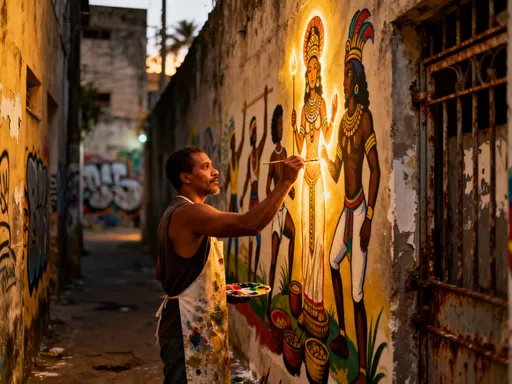
Hidden in the Iracema neighborhood, just a short walk from Fortaleza’s bustling beachfront, lies Beco do Beco—a narrow alley transformed into one of the city’s most powerful open-air galleries. What was once an overlooked passageway marked by graffiti has evolved into a dynamic canvas for social commentary, cultural celebration, and youth expression. The walls here are alive with murals that depict Afro-Brazilian heroes, Indigenous symbols, environmental warnings, and scenes from daily life in the favelas. Each painting is a statement, a story, or a call to awareness, created by local artists who use their talent to reclaim public space and amplify marginalized voices.
Beco do Beco began as an informal project in the early 2000s, when a group of young artists from the community began painting over vandalism with meaningful imagery. Over time, the initiative gained support from cultural collectives and city programs that recognized the power of art as a tool for social change. Today, the alley is protected and curated, with new works added regularly through community collaborations. Unlike commercial street art districts in other cities, Beco do Beco remains deeply rooted in local identity—its artists are often residents, and its themes reflect the realities of life in Fortaleza’s underserved neighborhoods.
Walking through Beco do Beco is more than a visual experience; it’s an education. One mural might honor Zumbi dos Palmares, a symbol of Black resistance in Brazil, while another illustrates the impact of plastic pollution on marine life. Still others celebrate regional folklore, such as the *boto* river dolphin or the mythical *curupira*. The art is bold, colorful, and unapologetically political, yet it is also accessible and inviting. Visitors are encouraged to explore, reflect, and engage—not by touching or defacing, but by listening and learning. Guided tours led by local youth offer context and personal stories behind the works, turning a simple walk into a profound cultural exchange.
Maracatu and Maracatu: The Rhythm of Resistance
In the early morning hours of certain weekends, the streets of neighborhoods like Mondubim and Conjunto Palmeira come alive with the thunderous beat of *maracatu*, a powerful Afro-Brazilian musical tradition with roots in Pernambuco but deeply embraced in Fortaleza’s Black communities. Clad in elaborate costumes—turbans, capes, and regal crowns—performers march in procession, embodying a symbolic royal court that honors African ancestry and spiritual resilience. The rhythm, driven by large alfaia drums, surdos, and gonguês, is both hypnotic and commanding, a sonic testament to centuries of cultural survival.
Maracatu in Fortaleza is not entertainment for tourists; it is a sacred expression of identity, resistance, and communal memory. The tradition traces its origins to the coronation ceremonies of Black kings during the colonial period, when enslaved Africans created their own systems of leadership and dignity under oppression. Today, maracatu groups—known as *nações*—function as cultural guardians, teaching youth about history, music, and self-respect. Rehearsals often take place in community centers or open plazas, where children learn drum patterns and dance steps alongside elders.
For visitors, witnessing a maracatu performance is a rare and privileged experience—one that must be approached with humility and respect. These events are not scheduled for tourist convenience but occur as part of religious festivals, cultural commemorations, or community celebrations. When invited, observers should remain quiet, avoid intrusive photography, and never attempt to join the procession without explicit permission. The true value of the experience lies in its authenticity: to stand quietly on the sidelines and feel the ground tremble with ancestral rhythm is to witness culture in its most unfiltered form. For those seeking depth over spectacle, maracatu offers a profound connection to Brazil’s African roots and the enduring strength of its people.
Feira de Artesanato da Praia de Iracema: More Than Souvenirs
Every evening as the sun dips below the Atlantic, the Feira de Artesanato da Praia de Iracema comes alive with color, music, and the hum of conversation. Stretching along the boardwalk near the iconic Dragão do Mar cultural center, this vibrant market is far more than a place to buy trinkets. It is a living showcase of Ceará’s creative spirit, where local designers, Indigenous artisans, and eco-conscious makers present their work with pride. Unlike mass-produced souvenirs found in tourist shops, the items here—handwoven baskets, beaded jewelry, ceramic sculptures, and upcycled fabric art—carry stories of origin, intention, and cultural significance.
One of the market’s most compelling features is its diversity of craft traditions. Stalls run by women from the Kariri and Tapeba Indigenous communities feature intricate beadwork inspired by ancestral symbols and natural motifs. Others specialize in *renda de bilro*, offering lace-trimmed tablecloths, blouses, and napkins that reflect the same techniques seen in Cumbuco. Still more vendors use recycled materials—plastic bags, fishing nets, and discarded wood—to create innovative, sustainable art. Each piece is a statement of both beauty and purpose, reflecting a commitment to environmental stewardship and cultural preservation.
For visitors, the key to a meaningful experience at the Iracema Craft Market is engagement. Rather than rushing from stall to stall, take time to speak with the artisans. Many are happy to explain their techniques, materials, and inspirations—especially when approached with genuine interest. Learning a few basic Portuguese phrases, such as *“Onde você aprendeu isso?”* (Where did you learn this?) or *“É uma tradição da sua família?”* (Is this a family tradition?), can open doors to heartfelt conversations. Shopping here is not just about acquisition; it’s about connection. By choosing to support local makers, travelers contribute directly to the sustainability of these crafts and the livelihoods of the people who keep them alive.
Cultura Samba de Roda: Nights of Music and Community
While samba is often associated with Rio’s grand Carnival parades, in Fortaleza, it thrives in a more intimate, organic form: the *samba de roda*. These informal gatherings take place in backyards, beachside *pousadas*, and quiet neighborhood plazas, where friends and families come together to sing, dance, and share music under string lights or a starlit sky. There is no stage, no ticket, and no script—just a circle of people, a few acoustic instruments, and the spontaneous joy of shared rhythm. Anyone can join, whether by clapping, singing along, or stepping into the circle to dance.
The beauty of samba de roda lies in its inclusivity and warmth. Unlike polished performances, these moments are unfiltered and deeply human. A grandmother might lead a nostalgic tune, a child could timidly pick up a tambourine, and a neighbor might recite a verse from a classic samba song. The music flows from one song to the next, guided by feeling rather than schedule. For visitors lucky enough to be invited—often through local connections or community events—these gatherings offer a rare glimpse into the heart of Brazilian social life.
Participating in a samba de roda is less about skill and more about presence. You don’t need to know the lyrics or master the dance steps; what matters is your willingness to be part of the moment. A smile, a nod, or a simple clap in rhythm can be enough to be welcomed. These gatherings are not put on for outsiders—they happen because the music is in the blood, the rhythm in the bones. To experience one is to understand that in Fortaleza, culture is not something you watch—it’s something you live.
How to Experience Culture Responsibly in Fortaleza
As interest in authentic cultural travel grows, so does the responsibility to engage with communities in ways that honor rather than exploit. In Fortaleza, where traditions are deeply personal and often born from histories of resilience, respectful interaction is not optional—it is essential. The difference between meaningful connection and performative tourism lies in intention, behavior, and awareness. Travelers who wish to experience the city’s cultural gems must do so with humility, patience, and a willingness to listen more than they speak.
One of the simplest yet most impactful steps is learning a few phrases in Portuguese. Even basic greetings like *“Bom dia”*, *“Obrigada”*, or *“Posso tirar uma foto?”* (Can I take a photo?) show respect and open the door to warmer interactions. When photographing people, murals, or ceremonies, always ask for permission—especially in sacred or private moments like maracatu processions or family gatherings. Avoid treating people as props; instead, seek to understand the context behind what you’re seeing.
Supporting community-led initiatives is another key practice. Whether it’s buying directly from artisans, attending locally organized workshops, or donating to cultural collectives, economic participation should benefit residents, not just external businesses. Avoid tour operators that promise “exclusive access” to sacred traditions without community endorsement. True cultural exchange is built on trust, not transaction.
Finally, practice patience. Some experiences cannot be scheduled or rushed. A samba de roda may not start until late at night. A lace-maker may be busy with family duties. A muralist may not want to be disturbed while painting. These are not inconveniences—they are reminders that culture exists on its own terms. By slowing down and honoring local rhythms, travelers can move beyond sightseeing and into the realm of soul-seeing.
Conclusion: Rediscovering Fortaleza One Cultural Moment at a Time
Fortaleza reveals its true magic not in panoramic views or luxury resorts, but in the quiet moments of human connection—the shared laugh at a samba circle, the pride in a lace-maker’s hands, the reverence in a maracatu drumbeat. These hidden cultural gems are not hidden because they are inaccessible, but because they require a different kind of attention—one that values depth over convenience, presence over possession. To travel this way is to move beyond the surface and into the heart of what makes a place truly alive.
The city’s cultural richness is not a performance for outsiders but a way of life for its people. When travelers approach it with respect, curiosity, and humility, they are not just observers—they become part of a larger story of preservation, pride, and shared humanity. Fortaleza invites us to look deeper, to listen closely, and to let culture lead the way. In doing so, we don’t just discover a new destination—we rediscover the purpose of travel itself: to connect, to understand, and to be transformed.