You Won’t Believe These Kingston Buildings Through My Lens
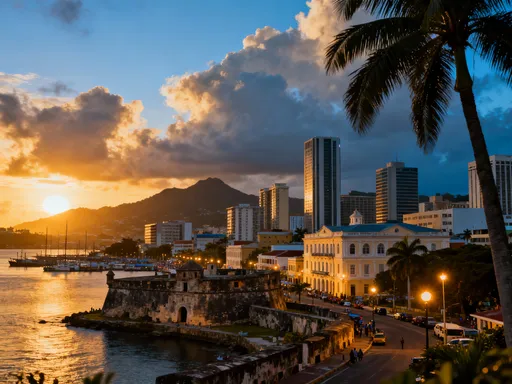
Kingston, Jamaica isn’t just reggae and mountains—its skyline tells stories too. As a photographer, I was blown away by how much character lives in its landmark buildings. From colonial-era facades to bold modern structures, every corner offers a frame worth capturing. This is more than architecture; it’s visual history, vibrant and unfiltered. If you’ve ever chased the perfect light or loved a good urban shot, Kingston’s streets will speak to you. The city pulses with energy, not only through its music and people but in the very walls that line its avenues. Here, buildings are not just shelters—they are storytellers, layered with time, resilience, and cultural pride. Capturing them is not merely about angles and exposure; it’s about honoring a legacy etched in brick and mortar.
First Impressions: Kingston’s Architectural Pulse
Walking through downtown Kingston, one immediately senses the city’s architectural heartbeat—a rhythm shaped by centuries of transformation, survival, and creativity. The skyline is not dominated by glass towers but by a patchwork of styles that reflect Jamaica’s complex journey. British colonial influences from the 19th century stand shoulder to shoulder with post-independence modernist designs, creating a visual dialogue between past and present. The city’s layout, with its grid-like downtown core, makes it surprisingly navigable for photographers aiming to cover key sites efficiently. What strikes the eye first is not grandeur, but authenticity—the peeling paint on century-old walls, the ironwork balconies weathered by salt air, and the vibrant street life that animates every façade.
Structures like the Victoria Jubilee Library and the Old Kings House are more than relics; they are living landmarks. The library, built in 1891, features high arched windows, coral stone walls, and a quiet dignity that commands respect through stillness rather than spectacle. Its pale yellow façade glows warmly in the late afternoon, making it a prime subject during golden hour. The Old Kings House, once a governor’s residence, now serves as part of the University of the West Indies campus. Its wide verandas and symmetrical layout speak to a time when architecture was designed for both function and colonial authority. Yet today, students pass beneath its arches, transforming its meaning from exclusion to education.
For photographers, the textures in downtown Kingston are a dream. Rough-hewn stone, aged wood, and oxidized metal offer tactile contrast in images. The play of light is equally compelling—early morning sun slants across narrow streets, casting long shadows that emphasize depth and form. By midday, the tropical brightness can be harsh, but this very intensity reveals details in color and surface. Understanding how the sun moves across the city’s east-west axis allows for better planning. Shooting from east to west in the morning avoids direct backlighting, while afternoon routes can follow the sun’s retreat for softer exposures. Mapping out clusters of buildings—like the concentration around Parade and King Streets—helps maximize shooting time without unnecessary travel.
Iconic Landmarks That Define the Skyline
No visual tour of Kingston is complete without the General Post Office on King Street, an enduring symbol of civic pride and architectural endurance. Completed in the early 20th century, its neoclassical design features grand columns, a prominent clock tower, and a central pediment that evokes order and permanence. The building has survived earthquakes, hurricanes, and decades of urban change, and its weathered limestone façade now bears the marks of time like a well-worn diary. For photographers, the symmetry of its front elevation makes it ideal for centered compositions, while low-angle shots emphasize its vertical strength against the sky.
Nearby, the Court of Appeal building presents another opportunity for clean, structured imagery. Its balanced façade, with evenly spaced windows and strong horizontal lines, invites minimalistic framing. The contrast between its pale stonework and the deep blue Jamaican sky creates natural visual drama. These buildings are not museums—they are active government spaces, so discretion is essential. Weekday mornings often mean increased foot traffic and security presence, particularly around entrances. It’s wise to avoid obstructing access points or using large tripods in high-traffic zones. Instead, use a compact setup and shoot from public sidewalks, capturing the buildings in context with daily life—couriers on bicycles, officials in crisp suits, and locals pausing for conversation.
One of the most rewarding aspects of photographing these landmarks is observing how they coexist with the present. At the General Post Office, for example, vintage architecture frames modern life—people check mobile phones beneath colonial arches, and delivery trucks pull up to century-old doorways. This blend of eras adds narrative depth to images. Reflections in glass or puddles can merge old and new in a single frame, creating metaphor as much as composition. Because these sites are central to Kingston’s identity, they deserve to be photographed with respect—not as static relics, but as evolving parts of a living city.
Hidden Gems in Unexpected Corners
While the grand buildings of central Kingston draw immediate attention, some of the most compelling photographic subjects lie off the beaten path. These are the quiet survivors—structures that time has overlooked but not erased. The historic Kingston Parish Church, dating back to the 1700s, stands as one such treasure. Partially restored but still bearing scars from past fires and earthquakes, its stone walls and arched doorway offer a haunting beauty. Early morning visits, just after sunrise, bathe the church in soft, diffused light, minimizing harsh contrasts and highlighting the texture of its aged masonry. With fewer pedestrians at this hour, it’s possible to compose clean shots that focus solely on form and light.
Equally evocative are the abandoned theaters and former commercial buildings tucked into side streets. Though their names and exact locations are not widely publicized—and rightly so, to protect privacy and safety—certain zones in western downtown and along Orange Street hold remnants of Kingston’s mid-20th century cultural boom. These structures, once vibrant with music and cinema, now stand in quiet decay. Their broken windows, graffiti-marked walls, and overgrown entryways provide raw material for powerful, moody compositions. For photographers, these sites offer a chance to explore themes of memory, loss, and resilience.
Gaining access to these lesser-known spots requires patience and cultural sensitivity. Many are on private or disputed land, so trespassing is not only unethical but risky. The best approach is to engage respectfully with nearby residents. A simple greeting, a brief explanation of your interest in Kingston’s architecture, and a genuine curiosity about the neighborhood can go a long way. Some locals may share stories about what a building once was—a dance hall, a tailor’s shop, a community meeting place—adding narrative richness to your visual work. In return, offering to share prints or digital copies of your photos can build goodwill. Always prioritize safety: avoid visiting alone, especially in areas with limited foot traffic, and keep gear discreet when moving between locations.
Light, Angles, and Timing: Mastering the Shot
In tropical cities like Kingston, light is both a gift and a challenge. The sun rises early and climbs high, creating intense midday glare that can wash out colors and flatten textures. For architectural photography, timing is not just helpful—it’s essential. The two most productive windows are the first hour after sunrise and the two hours before sunset. During these periods, the sun sits low on the horizon, casting long, dramatic shadows that emphasize shape and depth. The golden hour light, in particular, adds warmth to stone, brick, and paint, enhancing the emotional tone of an image.
One of the most effective techniques in Kingston is using shadows as compositional elements. A row of evenly spaced columns, for example, creates a repeating pattern of light and dark when lit from the side. This rhythm draws the eye and adds movement to static subjects. Similarly, the narrow streets of downtown amplify this effect, turning ordinary façades into graphic studies of contrast. Reflections, too, offer creative opportunities. Modern buildings like the Pinnacle Centre, with their glass exteriors, mirror the sky, clouds, and passing pedestrians. These reflections can be isolated to create abstract compositions, turning familiar structures into unexpected visual puzzles.
Angles play a crucial role in avoiding flat, postcard-style shots. Instead of photographing buildings head-on, try shooting from a 30- to 45-degree angle to emphasize perspective and depth. Low angles, using a slight upward tilt, can convey grandeur, especially for taller structures like the Court of Appeal. High angles are harder to achieve in dense urban areas, but rooftop views from nearby hotels or parking garages—when accessible—can provide rare overhead perspectives. A wide-angle lens is invaluable for capturing full façades in tight streets, but care must be taken to avoid excessive distortion. Using a tripod helps stabilize long exposures, particularly in low light, but it should be used discreetly in public areas to avoid drawing unnecessary attention.
Cultural Context Behind the Concrete
To photograph Kingston’s buildings without understanding their history is to miss half the story. Each structure is a chapter in Jamaica’s national narrative—colonial rule, the struggle for independence, and the ongoing expression of cultural identity. The National Gallery of Jamaica, housed in the historic Royall Court Building, is a perfect example. Originally constructed in the 18th century as a courthouse, it later became a symbol of artistic sovereignty. Today, it displays works by Jamaican artists within walls that once upheld British law. This transformation—from colonial institution to cultural beacon—adds profound meaning to any photograph taken within or of the building.
Similarly, the evolution of commercial architecture in Kingston reflects broader social changes. In the mid-20th century, as Jamaica moved toward independence, new government buildings and public spaces were designed with a distinct Caribbean modernism—less ornate than colonial styles, but more functional and inclusive. These designs often incorporated local materials and responded to the tropical climate with wide eaves, open courtyards, and natural ventilation. Photographing these buildings with an awareness of their purpose—serving the public, not just the elite—adds depth to the visual record.
Engaging with local knowledge enriches this understanding. Hiring a community-based guide, even for a few hours, can open doors—literally and figuratively. Guides often know the oral histories behind buildings: which ones survived the 1907 earthquake, which families once lived in certain homes, or how a particular plaza became a hub for political gatherings. These stories transform a simple photograph into a document of memory and identity. They also foster ethical photography—images taken with permission and context, rather than extracted as mere aesthetics. In a world where Caribbean cities are often reduced to beach resorts in global media, this deeper approach helps restore balance and dignity to urban narratives.
Gear and Practical Tips for Urban Shoots
Photographing Kingston’s architecture demands a balance between capability and practicality. A lightweight mirrorless or DSLR camera is ideal for long days on foot. These cameras offer high image quality without the bulk of older models. A wide-angle lens, in the 16–35mm range, is essential for capturing full building façades in narrow streets. A standard zoom lens (24–70mm) provides versatility for tighter shots and details like carvings, windows, or signage. For distant subjects or compressed perspectives, a telephoto lens (70–200mm) can isolate elements like clock towers or rooflines.
Other essentials include extra batteries—LCD screens drain power quickly in bright light—and high-capacity memory cards. A compact tripod or monopod is useful for low-light shots or long exposures, but should be used with discretion in public spaces. A polarizing filter can reduce glare on glass and enhance sky contrast, while a neutral density filter allows for slower shutter speeds in daylight, useful for smoothing traffic or cloud movement. A durable camera bag with quick access helps protect gear while staying mobile.
Equally important are personal preparations. Kingston’s climate is hot and humid, so staying hydrated is critical. Carry a reusable water bottle and take breaks in shaded areas. Wear lightweight, breathable clothing and a hat for sun protection. Comfortable walking shoes are non-negotiable—expect to cover several miles in a single shoot. Be aware of your surroundings at all times. While public photography is legal and generally welcomed, avoid pointing lenses at police stations, military installations, or private residences. If someone expresses discomfort, lower your camera and offer a respectful explanation. Most locals are curious and friendly, and a smile often leads to conversation—and sometimes, unexpected access.
Why These Buildings Deserve Global Attention
Despite its rich visual heritage, Kingston remains underrepresented in global architectural photography. International media often portrays Jamaica through the lens of beaches, resorts, and music—important aspects, but incomplete. The city’s built environment tells a different, equally vital story: one of endurance, adaptation, and cultural synthesis. These buildings have withstood natural disasters, economic shifts, and social change, yet they continue to serve and inspire. They are not monuments to a distant past, but active participants in daily life—homes, workplaces, cultural centers, and civic spaces.
Visual storytelling has the power to shift perceptions. When photographers from around the world begin to see Kingston not as a backdrop but as a subject of depth and dignity, it challenges stereotypes and broadens understanding. A well-composed image of the General Post Office at dawn, or the quiet grandeur of the Victoria Jubilee Library, does more than document—it invites empathy, curiosity, and appreciation. It says: this city is worth looking at, worth knowing, worth preserving.
For women photographers, especially those in the 30–55 age range who value meaningful travel and creative expression, Kingston offers a rare opportunity. It’s a place where art and history intersect, where every shutter click can feel like an act of connection. You don’t need to be a professional to contribute—your perspective matters. Whether you’re using a smartphone or a professional camera, your images can help rewrite the narrative. So pack your gear, respect the culture, and walk the streets with intention. Kingston’s soul lives in its bricks, its light, and the stories etched into every wall. All it asks is that you look closely—and see it for what it truly is.